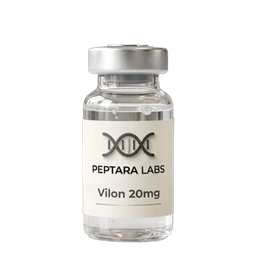
Vilon Peptide for Sale
Published by Peptara Labs · Updated · How we research and check our pages
Two Amino Acids, Mostly Russian Research
Vilon peptide from Peptara Labs (peptaralabs.io) is a 20mg research-grade vial for $50 USD, at its pre-sale price: 50% off the regular $100 until October 15, 17:00 UTC. Vilon is the two amino acid peptide Lys-Glu. Its published record is mostly cell and animal work from one research institute in Russia. Its batch certificate of analysis is pending, so no purity figure is claimed yet. Ships October 28. Delivery windows begin after dispatch. It is sold for research use only.
Pre-sale price, 50% off, ends October 15, 17:00 UTC
Flat $35 tracked shipping20mg per vial
Ships October 28
$50 USD
Was $100
The pre-sale price applies at every quantity. No code or multi-vial pricing is added to it.
Shipping, delivery and certificate status
- Shipping
- Flat $35, tracked worldwide to supported markets
- Delivery
- Ships October 28 · After dispatch: 5 to 10 business days
- Included
- Vial · Batch certificate pending · Order support on WhatsApp
Sources: PubChem CID 7010502; Khavinson 2000, PMID 11140587; Khavinson 2023, PMID 37782636.
Buyer facts
What do you get when you buy Vilon from Peptara Labs?
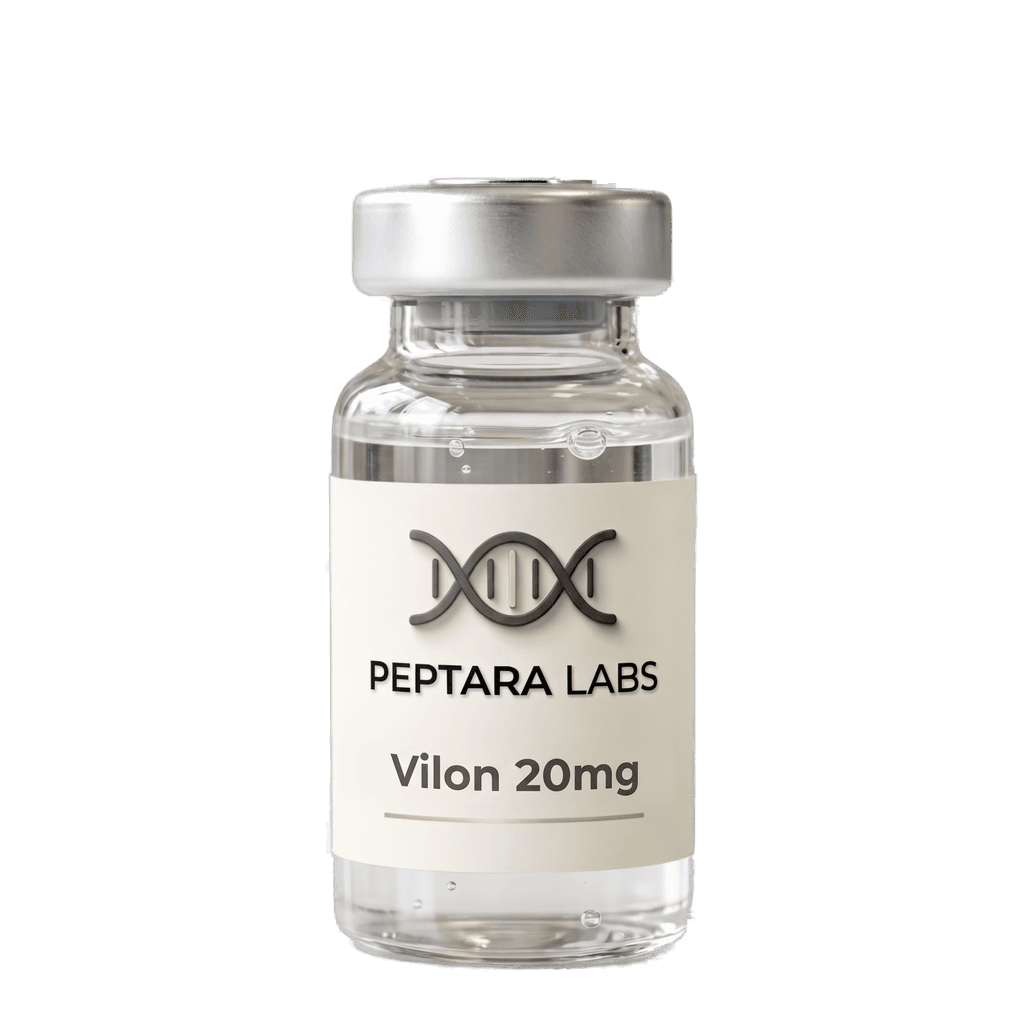
You get one sealed 20mg vial of lyophilized Vilon, the two amino acid peptide Lys-Glu. Lyophilized means dried powder. Its batch certificate is pending, so no purity figure is claimed yet. The table reads each figure from the same catalog and pricing records used for orders.
| Detail | Peptara Labs Vilon (20mg) | Where to check it |
|---|---|---|
| Vial | Vilon 20mg, lyophilized powder in a sealed vial | Order panel |
| Current vial price | $50 USD, at its pre-sale price: 50% off the regular $100 until October 15, 17:00 UTC | Live catalog price |
| Certificate | Batch certificate pending | Certificates page |
| Availability | Ships October 28. Delivery windows begin after dispatch. | Order panel |
| Delivery after dispatch | Ships October 28 · After dispatch: 5 to 10 business days | Confirmed with your order after dispatch. |
| Order support | Contact our team about your order or batch certificate. | Contact Peptara Labs |
Vilon was often tested side by side with Epithalon, a four amino acid peptide from the same research program. The comparison below shows those findings together. Shared authors or similar research topics do not make the two compounds interchangeable.
Share or cite this page
Sources: PubChem CID 7010502; Anisimov 2002, PMID 12360356.
Before you buy
What should you check before you buy Vilon?
Check whether the batch certificate confirms the compound's identity. Vilon is a small molecule with a molecular weight of 275.30 g/mol and the formula C11H21N3O5. A certificate should confirm that mass and report the measurements made on the batch, rather than offer only a product name.
Peptara Labs has no released Vilon certificate yet. There is no purity result, lot number or test date to report on this page. The certificates page is where the full document will appear once released. Published research about Lys-Glu does not certify the material in a particular vial, so these are separate checks.
Sources: PubChem CID 7010502.
The short answer
What is Vilon?
Vilon is a lab-made peptide of just two amino acids: lysine and glutamic acid. Its sequence is Lys-Glu, also written KE. It was developed at the St. Petersburg Institute of Bioregulation and Gerontology in Russia. The institute calls very short peptides like this one bioregulators.
That word describes the developers' research idea about how small peptides may affect gene activity. It is not a medical category. Nearly all of Vilon's studies are in cells and animals, and nearly all come from the same research network. The model and the measured marker matter more than that label when reading a study.
Sources: PubChem CID 7010502; Khavinson 2000, PMID 11140587; Khavinson 2023, PMID 37782636.
The science
What have lab studies measured with Vilon?
The cell studies measured packed DNA, gene activity and cell growth. Those are different questions. A change in how tightly DNA is packed does not, by itself, show a change in lifespan or establish an immune result outside the culture.
Chromatin in old cells
Chromatin is DNA packed with proteins. In white blood cells from older people grown in culture, Vilon loosened some tightly packed regions and reactivated ribosomal genes. The structural chromatin near the centromere did not change, so the finding did not apply to every packed region.
Gene activity in stem cells
In young human stem cells, KE raised SIRT1 gene activity 6 times and SIRT1 protein 8.2 times. In aging cells, it lowered PARP1 and PARP2 gene activity and protein levels. These are named measurements within the cell model, rather than a result for a person.
Spleen and thymus cells
Lys-Glu raised spleen cell growth in culture, while the separate amino acids slowed it. A computer model suggested binding in a small groove in DNA. Another study measured more CD5, a marker of T cell maturation, in human and rat thymus cell cultures.
The spleen study also tested whether linking the amino acids mattered. A Lys-Glu chain and a sample of its separate amino acids produced different growth measurements. The suggested DNA binding came from computer modeling, which cannot by itself establish the same binding in living cells.
Sources: Lezhava 2004, PMID 15105581; Khavinson 2023, PMID 37782636; Khavinson 2015, PMID 25705040; Sevostianova 2013, PMID 23486604.
Applications
What research areas is Vilon studied in?
Aging and lifespan in mice
A 2000 study measured lifespan, physical activity, endurance and other markers in female CBA mice given Vilon. The mice in that group lived longer. The paper concerns one animal model from the peptide's research network.
Immune cell cultures
Studies used spleen and thymus cells to examine cell growth and T cell maturation markers. These experiments measured what happened in cultures, rather than resistance to illness or an immune result in people.
Gene activity
Researchers examined mouse heart genes and SIRT1, PARP1 and PARP2 in human stem cell cultures. A gene activity result depends on the cells, the model and the test used. It does not supply a general claim about aging.
Gut uptake in aged rats
An aged rat study measured glucose and glycine uptake in different regions of the small intestine. Vilon and Epithalon changed uptake in different regions. The finding belongs to those rat tissues.
Tumors in rodents, with mixed findings
A rat study of chemically induced bladder tumors reported tumors in 56 percent of the Vilon group and 75.5 percent of controls. A different study in mice bred to grow breast tumors pointed the other way. Different models cannot be reduced to a single favorable claim.
Sources: Khavinson 2000, PMID 11140587; Sevostianova 2013, PMID 23486604; Khavinson 2015, PMID 25705040; Khavinson 2023, PMID 37782636; Anisimov 2002, PMID 12360356; Khavinson 2002, PMID 12420071; Pliss 2001, PMID 11586406; Alimova 2002, PMID 12101568.
Comparison
Vilon vs Epithalon: what did the side by side studies find?
The studies found different patterns with the two peptides. The table keeps the model and measurement attached to each result, including the unfavorable Vilon finding. These papers came from the same research group, so they are not independent replications across several labs.
| Year and model | What was measured | Vilon | Epithalon |
|---|---|---|---|
| 2002, mouse heart | Genes whose activity changed more than 2 times, out of 15,247 tested | 36 | 98 |
| 2002, small intestine of aged rats | Glucose uptake by gut region | Raised uptake in the lower and middle regions | Raised uptake in the upper, middle and lower regions; also raised glycine uptake in the upper region |
| 2002, mice bred to grow breast tumors | Mice with two or more tumors; the control group was 75 percent | 95 percent | 56 percent |
In the breast tumor model, more Vilon mice had several tumors than controls: 95 percent compared with 75 percent. The Epithalon group was 56 percent. These are mouse results from one group, not evidence about people. This adverse result is part of the published record even though other rodent studies reported different findings.
The heart row is also easy to overread. Changing more genes does not rank a peptide as better. It says that more genes crossed the paper's twofold threshold in that heart model. The gut row describes uptake by region, which is a separate measurement again.
Sources: Anisimov 2002, PMID 12360356; Khavinson 2002, PMID 12420071; Alimova 2002, PMID 12101568.
Evidence
What does the published record show?
The record includes cell culture studies and rodent experiments with different findings. It is mostly work from the developers' research network, with limited independent replication. These cards show what each selected paper examined and where its finding stops.
2000: lifespan in mice
Female CBA mice
The study reported longer lifespan, more physical activity and endurance, and fewer spontaneous tumors in the Vilon group. It found no change in estrous function or free radical processes. This was a mouse study from the peptide's research group, so the findings belong to that model.
2004: chromatin in cultured cells
Lymphocytes from older people, grown in the lab
Vilon loosened some tightly packed chromatin and reactivated ribosomal genes. It did not change the structural chromatin around the centromere, a region involved in cell division. That difference limits any claim that all packed DNA responded alike.
2023: stem cell gene activity
Young and aging human mesenchymal stem cells in culture
The study measured SIRT1, PARP1 and PARP2 gene activity and protein levels. These changed by different amounts in young and aging cells. The results describe measurements inside a cell culture, not a measured lifespan or immune result in people.
2002: mouse heart genes
DNA microarray of 15,247 clones
Vilon changed 36 genes beyond the study's twofold threshold, while Epithalon changed 98. The microarray compared activity across the 15,247 gene clones tested. The counts show that the peptides produced different patterns in this model; they do not rank either peptide for another purpose.
2002: the adverse tumor finding
Mice bred with the erbB-2/neu gene
More Vilon mice had two or more tumors than controls: 95 percent compared with 75 percent. The Epithalon group was 56 percent. Lung metastasis was 2.6 times more common with Vilon than with Epithalon. This study belongs beside the other rodent results, rather than being left out of the record.
Two small Russian-language reports from 2006 and 2007, by the same research network, describe patient observations and measurements of blood clotting and immune markers. They are not registered controlled trials, and this page draws no claim from them. The ClinicalTrials.gov search checked on October 7, 2026 listed no Vilon trial.
Cells collected from people and grown in a dish still form a cell culture study. That is a different kind of evidence from a controlled trial in people. The cell findings and the patient reports should not be combined into an implied result that neither study design tested.
Sources: Khavinson 2000, PMID 11140587; Lezhava 2004, PMID 15105581; Khavinson 2023, PMID 37782636; Anisimov 2002, PMID 12360356; Alimova 2002, PMID 12101568; Kuznik 2006, PMID 17152731; Kuznik 2007, PMID 18306698; ClinicalTrials.gov, checked October 7, 2026.
Research timeline
How the Vilon record was built
Research timeline
How the Vilon record was built
Research timeline
How the Vilon record was built
2000: mouse lifespan
Researchers measured biological age and lifespan in mice given Vilon.
2001: rat tumors
A study examined chemically induced bladder tumors in rats.
2002: side by side with Epithalon
Studies measured heart gene activity, gut uptake and tumors in rodent models.
2004: packed DNA
Researchers examined chromatin in white blood cells from older people, grown in culture.
2015: peptide bonds
A spleen cell culture study compared Lys-Glu with its separate amino acids.
2023: stem cell genes
Researchers measured gene activity and proteins in aging human stem cell cultures.
Sources: Khavinson 2000, PMID 11140587; Pliss 2001, PMID 11586406; Anisimov 2002, PMID 12360356; Khavinson 2002, PMID 12420071; Alimova 2002, PMID 12101568; Lezhava 2004, PMID 15105581; Khavinson 2015, PMID 25705040; Khavinson 2023, PMID 37782636.
Your Kit
What's Included
$50 USD Was $100 USD
Flat $35 tracked shipping · Ships October 28 · Batch certificate pending · Order support on WhatsApp
Pre-sale price, 50% off, ends October 15, 17:00 UTC
Vilon 20mg Vial
20mg per vial
Batch certificate
Batch certificate pending
Delivery
Ships October 28 · After dispatch: 5 to 10 business days
Order support
Contact our team about your order or batch certificate.
Your order includes the vial. Batch certificate pending. Delivery details are confirmed with your order. Order support is available on WhatsApp.
Your Research Order
Vilon research vial, batch certificate status, delivery and order support.
Batch certificate
Batch certificate pending
Delivery
Ships October 28 · After dispatch: 5 to 10 business days
Order support
Contact our team about your order or batch certificate.
Research and citations
Sources
- PubChem, Vilon. Lysylglutamic acid, CID 7010502. PubChem CID 7010502
- Khavinson et al., 2000. Biological age and lifespan in mice. Bull Exp Biol Med. PMID 11140587. DOI 10.1007/BF02682106
- Pliss et al., 2001. Chemically induced bladder tumors in rats. Bull Exp Biol Med. PMID 11586406. DOI 10.1023/a:1012354603132
- Anisimov et al., 2002. Vilon and Epithalon gene activity in mouse heart, measured with DNA microarrays. Bull Exp Biol Med. PMID 12360356. DOI 10.1023/a:1015859322630
- Khavinson et al., 2002. Glucose and glycine uptake in small intestine regions of aged rats. Bull Exp Biol Med. PMID 12420071. DOI 10.1023/a:1019878224754
- Alimova et al., 2002. Vilon and Epithalon in mice bred with the erbB-2/neu gene, in Russian with an English abstract. Vopr Onkol. PMID 12101568. PubMed PMID 12101568
- Lezhava et al., 2004. Chromatin in cultured lymphocytes from older people. Biogerontology. PMID 15105581. DOI 10.1023/B:BGEN.0000025070.90330.7f
- Sevostianova et al., 2013. Vilon and its analogue in human and rat thymus cell cultures. Bull Exp Biol Med. PMID 23486604. DOI 10.1007/s10517-013-2000-0
- Khavinson et al., 2015. Peptide bonds and short peptide activity in spleen cell cultures. Bull Exp Biol Med. PMID 25705040. DOI 10.1007/s10517-015-2805-0
- Khavinson et al., 2023. KE, SIRT1, PARP1 and PARP2 in aging human mesenchymal stem cells, in Russian with an English abstract. Adv Gerontol. PMID 37782636. PubMed PMID 37782636
- Kuznik et al., 2006. A Russian-language report on blood clotting and immune markers. Adv Gerontol. PMID 17152731. PubMed PMID 17152731
- Kuznik et al., 2007. A Russian-language report on blood clotting and immune markers. Adv Gerontol. PMID 18306698. PubMed PMID 18306698
- ClinicalTrials.gov. Search for Vilon, checked October 7, 2026. Vilon trial search
Cell and rodent findings are reported as findings in their tested models. The patient reports are listed to make the record clear, and this page draws no medical claim from them. Product identity and a batch certificate are separate from the research record.
Explore more
Related guides, comparisons, and compounds studied for related endpoints
Epithalon peptide
A four amino acid peptide tested side by side with Vilon in several studies.
Thymosin Alpha-1 peptide
A separate peptide with its own immune research record.
Immune research guide
Compare the models and limits behind immune cell research.
Longevity research guide
Read what animal and cell studies can tell researchers about aging.
Cartalax peptide
The Ala-Glu-Asp tripeptide studied in cell and tissue cultures.
Testagen peptide
A four amino acid peptide from the same short peptide research program.
Batch certificates
Check which certificates have been released and which remain pending.
How to read purity evidence
Learn what a certificate can confirm about a research vial.
Peptide glossary
Plain definitions of research terms used on this page.
What are peptides?
An introduction to amino acids and peptide chains.
Questions
Buying Vilon from Peptara Labs
Where can I buy Vilon peptide?
Peptara Labs sells Vilon online as a 20mg research vial, ordered from this page. Compare sellers on the batch certificate, which should confirm Lys-Glu by its molecular weight of 275.30 g/mol. The current vial price is $50 USD, at its pre-sale price: 50% off the regular $100 until October 15, 17:00 UTC. Ships October 28. Delivery windows begin after dispatch. Batch certificate pending.
Vilon research questions
What is Vilon peptide?
Vilon is a lab-made peptide of two amino acids, Lys-Glu. It was developed at a research institute in St. Petersburg, Russia, and almost all of its studies are in cells and animals from that same group.
What has Vilon been studied for?
Lab and animal studies looked at aging, immune cells, gene activity and tumors. In one mouse study the Vilon mice lived longer; in another, mice bred to grow breast tumors had more tumors with Vilon. These are animal results, not evidence about people.
Is Vilon a bioregulator?
Bioregulator is the name its developers use for very short peptides they think can act on genes. It describes a research idea, rather than an established effect or a medical category.
Has Vilon been tested in people?
Two small Russian-language reports from 2006 and 2007 describe patient observations. They are not registered controlled trials, and the ClinicalTrials.gov search checked on October 7, 2026 listed no Vilon trial. This page draws no claim from those reports. Peptara Labs sells Vilon for laboratory research only.
Sources: PubChem CID 7010502; Khavinson 2000, PMID 11140587; Alimova 2002, PMID 12101568; Kuznik 2006, PMID 17152731; Kuznik 2007, PMID 18306698; ClinicalTrials.gov, checked October 7, 2026.
Order Vilon, 20mg vial
Order Vilon. Ships October 28 · After dispatch: 5 to 10 business days. Order support on WhatsApp.
Order NowBatch certificate pending · Ships October 28 · Order support on WhatsApp