Supplies
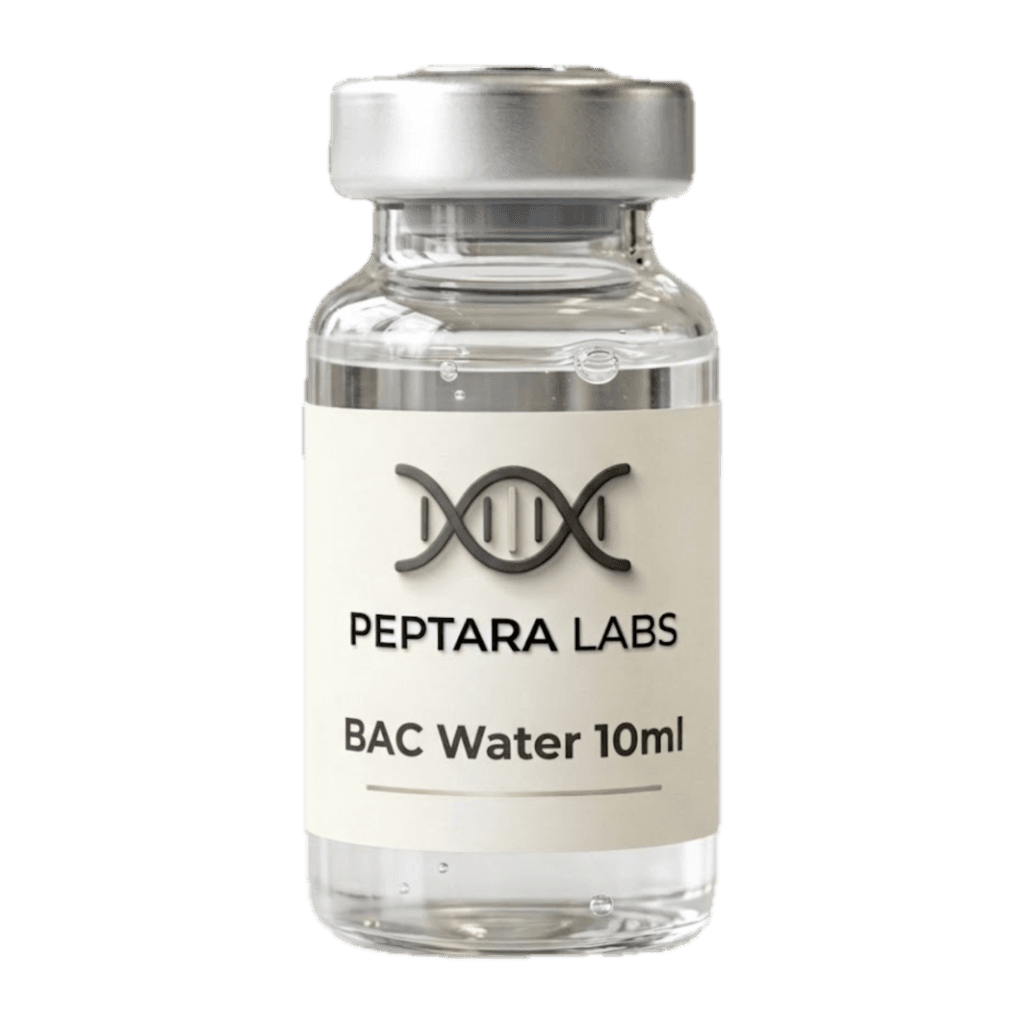
Bacteriostatic Water
Sterile water with 0.9 percent benzyl alcohol, the diluent a multi-use vial takes.
Three sizes. The 10mL bottle is the one with quantity pricing.
Quantity pricing is on the 10mL bottle only: 8% off from two, 21% from five, 37% from ten. The rate you reach prices every bottle on the line.
$19 USD
480,000 VND
Add 1 more, unlock 8%
Bacteriostatic water on its own starts at $35. Add 1 more 10mL bottle.
What ships
- 10mL vial, sealed.
- Same-day delivery in Ho Chi Minh City, 1 to 3 days nationwide.
- 5 to 10 business days worldwide, tracked.
The short answer
What is bacteriostatic water?
Bacteriostatic water for injection is sterile water containing 0.9 percent benzyl alcohol as a preservative. The preservative is the whole point of the product: it inhibits bacterial growth in a vial between draws, which is what makes a multi-use vial possible at all. Sterile water for injection is a different product and carries no preservative. The two bottles look alike, so the label is what tells them apart.
Why this liquid
Why a lyophilised vial needs a diluent
A research peptide ships as a lyophilised powder, which is the form it is stable in. It is not a liquid until a diluent is added, and adding one is what sets the concentration for the rest of that vial's life: the milligrams in the vial divided by the millilitres put into it. That is the only arithmetic involved, and it is the arithmetic the reconstitution calculator does, reporting the answer in units rather than mL.
Bacteriostatic water is the diluent a multi-use vial takes, because the benzyl alcohol lets that vial be entered more than once. A single-entry preparation is the case sterile water covers. Which one a given compound calls for is a question for a qualified clinician, not for this page.
The sizes
What each bottle covers, in 2mL reconstitutions
Every vial on this site is reconstituted with 2mL, one volume for every compound, so the sizes divide cleanly. This is arithmetic about a bottle, not a recommendation about a protocol: the table says how many full 2mL measures fit in each bottle and how much is left over.
| Bottle | Price | Full 2mL measures | Left in the bottle |
|---|---|---|---|
| 3mL | $9 | 1 | 1mL |
| 5mL | $14 | 2 | 1mL |
| 10mL | $19 | 5 | Nothing |
So a 10mL bottle is the only one of the three that divides exactly: 5 measures of 2mL, nothing left over. The reconstitution quick reference carries the 2mL standard and the per-vial concentration table it produces.
Quantity pricing
The 10mL bottle, by the line
The rate a line reaches prices every bottle on that line. The 3mL and the 5mL are one price per bottle at every quantity.
| 10mL bottles | Each | Line total | Off the single price |
|---|---|---|---|
| 1 | $19.00 | $19 at 1 | 0% |
| 2 or more | $17.50 | $35 at 2 | 8% |
| 5 or more | $15.00 | $75 at 5 | 21% |
| 10 or more | $12.00 | $120 at 10 | 37% |
An order of supplies and nothing else starts at $35, which is what two 10mL bottles come to. An order that also holds a research vial has no minimum of its own. Supplies count nothing toward the free-shipping threshold and nothing toward any vial discount, in either direction.
Storage
Before the bottle is opened, and after
Unopened, a bottle keeps at room temperature, away from direct light, until the expiry printed on it. Once it has been entered, the in-use period on that same label is the one that applies, and it is the label on the bottle in hand rather than a figure repeated from elsewhere. We do not publish a day count on this page for that reason.
The reconstituted peptide vial is the separate question, and it has its own answer: once mixed it goes to 2 to 8 Celsius, and the shelf life differs by compound. The reconstitution reference and each compound's own page carry those figures.
Explore more
Related guides, comparisons, and compounds studied for related endpoints
Reconstitution quick reference
The 2mL standard and the per-vial concentration table, reported in units rather than mL.
Reconstitution calculator
Vial strength against diluent volume, worked out in units for any bottle you actually mixed.
Units against milligrams
Why a syringe is marked in units and a vial is labelled in milligrams, and how the two convert.
The full catalog
Every research vial we carry, each one shipped with bacteriostatic water and a container.