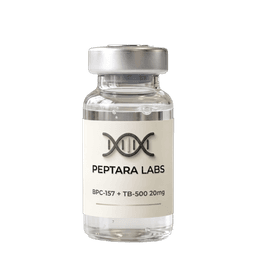
BPC-157 TB-500 Blend for Sale
Published by Peptara Labs · Updated · How we research and check our pages
10mg BPC-157 Plus 10mg TB-500, One Vial
BPC-157 TB-500 blend from Peptara Labs (peptaralabs.io) is one 20mg research vial holding 10mg of each peptide, for $87.5 USD, at its pre-sale price: 50% off the regular $175 until October 15, 17:00 UTC, and ships october 28, 2026. Its batch certificate of analysis is pending, so no purity figure is claimed yet. It is sold for research use only.
Pre-sale price, 50% off, ends October 15, 17:00 UTC
Flat $35 tracked shipping20mg (10mg + 10mg) per vial
Ships October 28
$87.50 USD
Was $175
The pre-sale price applies at every quantity. No code or multi-vial pricing is added to it.
Shipping, delivery and certificate status
- Shipping
- Flat $35, tracked worldwide to supported markets
- Delivery
- Ships October 28 · After dispatch: 5 to 10 business days
- Included
- Vial · Batch certificate pending · Order support on WhatsApp
Buyer facts
What do you get when you buy the BPC-157 TB-500 blend?
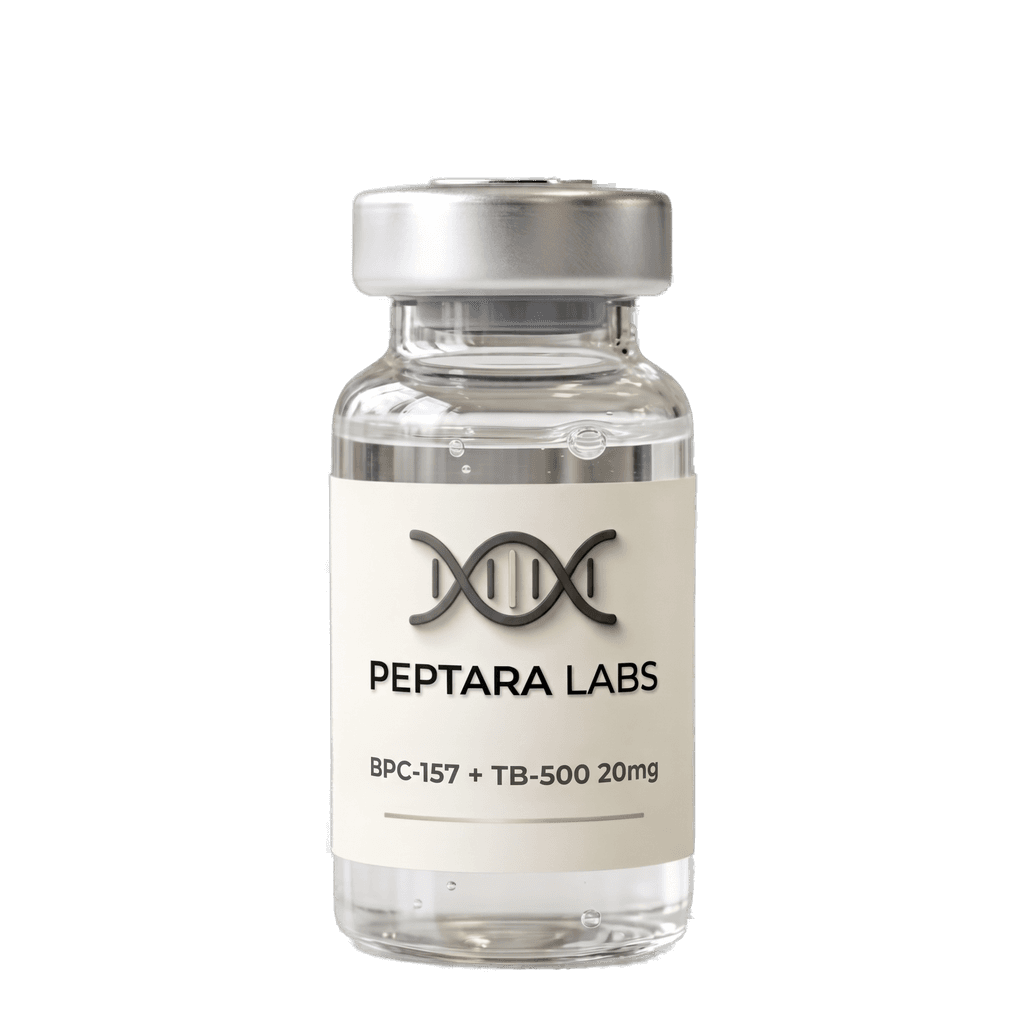
The order contains one sealed vial of lyophilized powder, 20mg in total with 10mg of each peptide. Its batch certificate is pending, so no measured purity is claimed.
| Detail | BPC-157 + TB-500 Blend | Where to check it |
|---|---|---|
| Compounds | BPC-157 and TB-500, 10mg each | Vial contents |
| Vial | 20mg (10mg + 10mg) lyophilized powder, one sealed vial | Vial listing |
| Price | $87.5 USD, at its pre-sale price: 50% off the regular $175 until October 15, 17:00 UTC | Order panel |
| Standard price per mg | $8.75 per mg, based on the regular $175 vial | Standard price |
| Availability | Ships October 28, 2026. This is the dispatch start; delivery follows dispatch. | Dispatch status |
| Certificate | Batch certificate pending | Certificates of analysis |
| Purpose | Research use only | Product listing |
The same peptides are listed separately as BPC-157 20mg and TB-500 10mg, and both are included in KLOW Combo 80mg.
Your order includes the vial. Batch certificate pending. Delivery details are confirmed with your order. Order support is available on WhatsApp.
Share or cite this page
Before you buy
What should you check before you buy a BPC-157 TB-500 blend?
A blend certificate should identify both peptides and report how much of each is in the vial. One purity number for a blend cannot answer both questions.
TB-500 should be identified as the short thymosin beta-4 fragment LKKTETQ. The full-length protein and this fragment are different molecules. The certificate for this Peptara Labs blend is pending, so these checks have not yet been confirmed by a published batch panel.
See how to verify peptide purity for the general certificate checks, and the certificates page for batch status.
Sources: FDA, 2026, FDA safety-risk listing.
The short answer
What is a BPC-157 TB-500 blend?
It is two separate research peptides in one vial. BPC-157 is a lab-made peptide of 15 amino acids, based on part of a protein found in gastric juice. TB-500 is the short LKKTETQ fragment of thymosin beta-4. A single vial contains both ingredients; it does not establish how the pair behaves in a study.
Sources: Chang et al., 2011, Journal of Applied Physiology; FDA, 2026, FDA safety-risk listing.
The science
What does each peptide do in lab studies?
BPC-157 has been examined in tendon cells for cell outgrowth, survival under stress and movement. Researchers linked the cell movement findings to FAK and paxillin, proteins involved in cell attachment. A separate rat study examined tendon-to-bone healing after Achilles tendon detachment.
Full-length thymosin beta-4 binds actin, a protein that helps give cells their shape and lets them move. Researchers have examined the parent protein in blood vessel growth, scarring and skin wound models. Those parent protein studies are not TB-500 studies, so their findings cannot simply be assigned to the short fragment.
BPC-157 tendon cells
Lab studies measured outgrowth, survival and cell movement.
Thymosin beta-4 and actin
Research on the parent protein examined actin binding and cell movement.
Fragment identity matters
TB-500 is a short fragment, while much of the older research used the full-length protein.
Sources: Chang et al., 2011, Journal of Applied Physiology; Krivic et al., 2006, Journal of Orthopaedic Research; Goldstein et al., 2012, Expert Opinion on Biological Therapy; Malinda et al., 1999, Journal of Investigative Dermatology.
Applications
What have these peptides been studied in?
Tendon repair in rats
Rat studies examined BPC-157, TB-500 and tendon structure or mechanical strength.
Skin wounds in rats
Full-length thymosin beta-4 studies measured closure of skin wounds.
Tendon cells in the lab
BPC-157 studies measured cell outgrowth, survival under stress and movement.
Eye, heart and brain models
Reviews describe these research areas for full-length thymosin beta-4, rather than establish them for TB-500.
Sources: Chang et al., 2011, Journal of Applied Physiology; Krivic et al., 2006, Journal of Orthopaedic Research; Goldstein et al., 2012, Expert Opinion on Biological Therapy; Malinda et al., 1999, Journal of Investigative Dermatology; Bicer et al., 2026, Joint Diseases and Related Surgery.
Comparison
Blend vs separate vials vs KLOW vs the Wolverine kit
A blend holds both peptides in one vial. A stack can refer to separate vials, and the Wolverine name is also used for a catalog kit. These listings have different contents.
| Option | What is in it | Vials | Standard price | Where |
|---|---|---|---|---|
| This blend | 20mg (10mg + 10mg): BPC-157 and TB-500 | 1 | $175 USD | This page |
| Separate vials | BPC-157 20mg; TB-500 10mg | 2 | $358 USD | BPC-157 and TB-500 |
| KLOW | 80mg: BPC-157, TB-500, GHK-Cu and KPV | 1 | $210 USD | KLOW |
| Wolverine kit | BPC-157 20mg; TB-500 10mg; GHK-Cu 100mg; CJC-1295 / Ipamorelin 10mg | 4 | $462 USD | Wolverine kit |
The table lists standard vial prices and the listed kit price. Current offers appear on each product page. The BPC-157 and TB-500 research comparison covers the separate peptides.
Evidence
Has anyone studied BPC-157 and TB-500 together?
Yes. A July 2026 paper tested 32 rats with repaired Achilles tendons in four groups: control, BPC-157, TB-500 and both peptides. At four weeks, the TB-500 group had a higher load to failure, the force needed to break the tendon, than controls. Tendon structure scores were better in the TB-500 and combined groups. The BPC-157 group had lower scores, but that difference was not statistically significant.
The authors found no added advantage from the combination over either peptide alone. This is a rat study of the two peptides, not evidence for this vial or an effect in people.
The pair in rats
Model: 32 rats with repaired Achilles tendons.
Measured: Tendon structure and load to failure. The combined group did not add an advantage over either peptide alone.
BPC-157 tendon cells
Model: Tendon cells in the lab.
Measured: Cell outgrowth, survival under stress, movement and FAK-paxillin signaling.
BPC-157 tendon-to-bone study
Model: Rats after Achilles tendon detachment.
Measured: Tendon-to-bone healing and tissue structure.
Parent protein skin study
Model: Rats with full-thickness skin wounds.
Measured: Full-length thymosin beta-4 and skin wound closure at study assessment points.
Parent protein review
Model: Published thymosin beta-4 research.
Measured: Actin binding, cell movement and skin, eye, heart and brain research models.
Safety record
Model: A 2026 review and the FDA listing.
Measured: The review described rigorous safety data in people as scarce. The FDA had not identified human exposure data for TB-500.
The FDA lists both BPC-157 and the thymosin beta-4 fragment among substances nominated for compounding and later withdrawn. That listing does not establish approval. Its TB-500 entry says no human exposure data had been identified.
Sources: Bicer et al., 2026, Joint Diseases and Related Surgery; Chang et al., 2011, Journal of Applied Physiology; Krivic et al., 2006, Journal of Orthopaedic Research; Malinda et al., 1999, Journal of Investigative Dermatology; Goldstein et al., 2012, Expert Opinion on Biological Therapy; Mendias and Awan, 2026, Sports Medicine; FDA, 2026, FDA safety-risk listing.
What is not known
What is still unknown about the blend?
The cited record contains one rat study of the pair and no study of the pair in people. ClinicalTrials.gov searches on October 7, 2026 returned 4 records for BPC-157 and 1 for TB-500, with none for the pair in one vial. These are dated search counts, not completed-trial counts.
The sources cited here do not establish a half-life or safety profile for the blend. A parent protein finding or a single-peptide finding cannot answer those questions for this combination.
Sources: Bicer et al., 2026, Joint Diseases and Related Surgery; Mendias and Awan, 2026, Sports Medicine; FDA, 2026, FDA safety-risk listing; ClinicalTrials.gov, October 7, 2026, BPC-157 search; ClinicalTrials.gov, October 7, 2026, TB-500 search.
Research timeline
How the two-peptide record was built
Research timeline
How the two-peptide record was built
Research timeline
How the two-peptide record was built
1999: skin wound models
Researchers studied full-length thymosin beta-4 and skin wound closure in rats.
2006: tendon-to-bone models
A rat study examined BPC-157 after Achilles tendon detachment.
2011: tendon cells
Lab work examined tendon cell outgrowth, survival and movement with BPC-157.
2012: parent protein review
A review covered thymosin beta-4 and its role in actin, cell movement and tissue models.
2026: FDA safety listing
The FDA listed BPC-157 and the thymosin beta-4 fragment among nominated substances that were later withdrawn.
July 2026: the pair studied
A study compared BPC-157, TB-500 and both together in rats with repaired Achilles tendons.
Sources: Malinda et al., 1999, Journal of Investigative Dermatology; Krivic et al., 2006, Journal of Orthopaedic Research; Chang et al., 2011, Journal of Applied Physiology; Goldstein et al., 2012, Expert Opinion on Biological Therapy; FDA, 2026, FDA safety-risk listing; Bicer et al., 2026, Joint Diseases and Related Surgery.
Your Kit
What's Included
$87.5 USD Was $175 USD
Flat $35 tracked shipping · Ships October 28 · Batch certificate pending · Order support on WhatsApp
Pre-sale price, 50% off, ends October 15, 17:00 UTC
BPC-157 + TB-500 Blend 20mg (10mg + 10mg) Vial
20mg (10mg + 10mg) per vial
Batch certificate
Batch certificate pending
Delivery
Ships October 28 · After dispatch: 5 to 10 business days
Order support
Contact our team about your order or batch certificate.
Your order includes the vial. Batch certificate pending. Delivery details are confirmed with your order. Order support is available on WhatsApp.
Your Research Order
BPC-157 + TB-500 Blend research vial, batch certificate status, delivery and order support.
Batch certificate
Batch certificate pending
Delivery
Ships October 28 · After dispatch: 5 to 10 business days
Order support
Contact our team about your order or batch certificate.
Research and citations
Peer-reviewed and regulator sources
- Bicer et al., 2026, Joint Diseases and Related Surgery. Achilles tendon healing in rats, with histology and biomechanical testing. PMID 42542926. DOI 10.52312/jdrs.2026.2951.
- Chang et al., 2011, Journal of Applied Physiology. Tendon cell outgrowth, survival and migration. PMID 21030672. DOI 10.1152/japplphysiol.00945.2010.
- Krivic et al., 2006, Journal of Orthopaedic Research. BPC-157 and tendon-to-bone healing in rats. PMID 16583442. DOI 10.1002/jor.20096.
- Goldstein et al., 2012, Expert Opinion on Biological Therapy. Review of thymosin beta-4, actin, cell movement and tissue models. PMID 22074294. DOI 10.1517/14712598.2012.634793.
- Malinda et al., 1999, Journal of Investigative Dermatology. Thymosin beta-4 and skin wound closure in rats. PMID 10469335. DOI 10.1046/j.1523-1747.1999.00708.x.
- Mendias and Awan, 2026, Sports Medicine. Review noting scarce rigorous safety data in people. PMID 41966639.
- FDA, 2026, FDA safety-risk listing. BPC-157 and the thymosin beta-4 fragment LKKTETQ, also known as TB-500. Content current April 22, 2026.
- ClinicalTrials.gov, October 7, 2026, BPC-157 search. 4 registered records in the dated search.
- ClinicalTrials.gov, October 7, 2026, TB-500 search. 1 registered record in the dated search; no record for the pair in one vial.
Explore more
Related guides, comparisons, and compounds studied for related endpoints
BPC-157 and TB-500 research comparison
The education guide for the two separate peptides.
BPC-157
BPC-157 as a single research vial.
TB-500
The thymosin beta-4 fragment as a single research vial.
KLOW
BPC-157, TB-500, GHK-Cu and KPV in one vial.
Wolverine research kit
Four separate research vials in one kit.
BPC-157 vs TB-500
How the peptides and their research records differ.
Tissue injury research
A guide to compounds examined in tissue models.
Tendon research
Research records for compounds studied in tendon models.
BPC-157 price per vial
Catalog prices and sizes for BPC-157.
TB-500 price per vial
Catalog prices and sizes for TB-500.
How to verify peptide purity
Identity, content and purity checks on a certificate.
Certificates of analysis
Published batch certificates and pending status.
FAQ
Buying the BPC-157 TB-500 blend: FAQ
How much is the BPC-157 TB-500 blend?
One 20mg vial with 10mg of each peptide is $87.5 USD, at its pre-sale price: 50% off the regular $175 until October 15, 17:00 UTC. Ships October 28, 2026. This is the dispatch start; delivery follows dispatch. Research use only.
Where can I buy BPC-157 and TB-500?
Peptara Labs lists the pair in one vial on this page, each as a single vial, and inside the four-peptide KLOW vial. The blend's batch certificate is pending, so no purity figure is claimed yet.
What comes with the blend?
One sealed 20mg (10mg + 10mg) vial of lyophilized powder, with 10mg BPC-157 and 10mg TB-500. Its batch certificate of analysis is pending.
BPC-157 TB-500 blend research FAQ
What do BPC-157 and TB-500 do together?
The cited 2026 study tested the pair in rats with repaired Achilles tendons. The combined group had better tendon structure scores than controls, but the authors found no added advantage over either peptide alone.
What is TB-500?
TB-500 is a short lab-made fragment of thymosin beta-4, a protein studied in actin binding and cell movement. The FDA lists the fragment sequence as LKKTETQ. Research on the full-length parent protein does not establish the same findings for TB-500.
What side effects are recorded for BPC-157 and TB-500?
There is no study of the pair in people in the cited record. The FDA says it has found no human exposure data for TB-500, and a 2026 review describes rigorous safety data in people as scarce.
Sources: Bicer et al., 2026, Joint Diseases and Related Surgery; Goldstein et al., 2012, Expert Opinion on Biological Therapy; FDA, 2026, FDA safety-risk listing; Mendias and Awan, 2026, Sports Medicine.
Order BPC-157 + TB-500 Blend, 20mg (10mg + 10mg) vial
Order BPC-157 + TB-500 Blend. Ships October 28 · After dispatch: 5 to 10 business days. Order support on WhatsApp.
Order NowBatch certificate pending · Ships October 28 · Order support on WhatsApp