AHK-Cu Peptide for Sale
Published by Peptara Labs · Updated · How we research and check our pages
Ala-His-Lys Bound to Copper, Studied in Labs
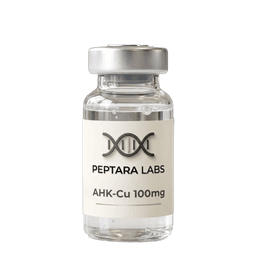
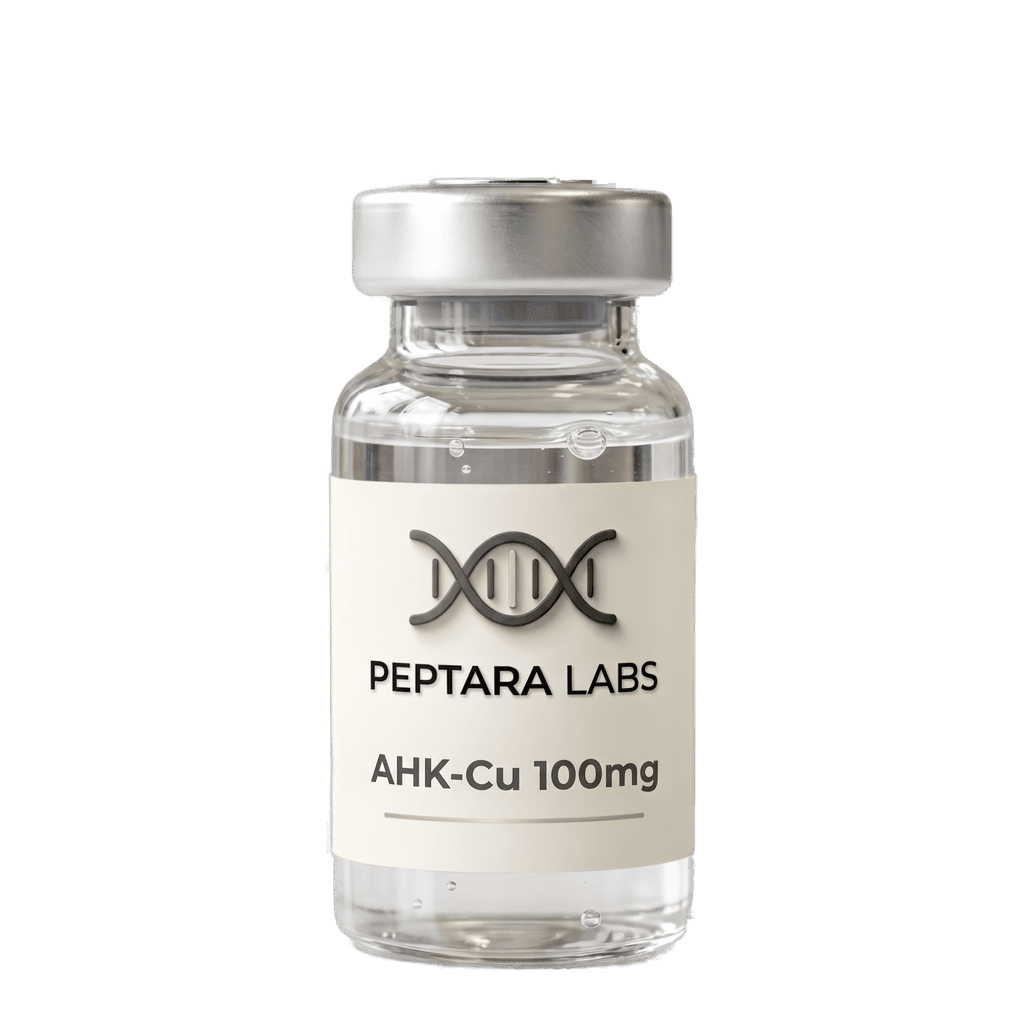
AHK-Cu peptide from Peptara Labs (peptaralabs.io) is a 100mg research vial of alanyl-histidyl-lysine bound to copper, a close relative of GHK-Cu. It costs $50 USD, at its pre-sale price: 50% off the regular $100 until October 15, 17:00 UTC. Its batch certificate of analysis is pending, so no purity figure is claimed yet. On pre-order: Ships October 28. It is sold as lyophilized powder for research use only.
Pre-sale price, 50% off, ends October 15, 17:00 UTC
Flat $35 tracked shipping100mg per vial
Ships October 28
$50 USD
Was $100
The pre-sale price applies at every quantity. No code or multi-vial pricing is added to it.
Shipping, delivery and certificate status
- Shipping
- Flat $35, tracked worldwide to supported markets
- Delivery
- Ships October 28 · After dispatch: 5 to 10 business days
- Included
- Vial · Batch certificate pending · Order support on WhatsApp
Buyer facts
What comes with AHK-Cu from Peptara Labs?
This listing is one sealed 100mg research vial of AHK-Cu powder. A finished cosmetic has a full formula and other ingredients; a research vial has a different identity and purpose. The pending certificate means this page has no measured purity or batch result to quote.
| Detail | Peptara Labs AHK-Cu (100mg) | Where to check it |
|---|---|---|
| Vial | 100mg of lyophilized AHK-Cu powder in a sealed vial | Order panel |
| Price | $50 USD, at its pre-sale price: 50% off the regular $100 until October 15, 17:00 UTC | Order panel |
| Availability | Pre-order. Ships October 28 | Order panel |
| Certificate | Batch certificate pending | Certificates of analysis |
| Purity | No purity figure is claimed while the batch certificate is pending | Certificate status |
| Identity | Ala-His-Lys bound to copper, distinct from GHK-Cu | Research sources below |
| Product form | Research powder vial, not a finished serum | This listing |
Share or cite this page
Sources: Pyo et al., 2007, Archives of Pharmacal Research; PubChem CID 7408502.
Before you buy
What should be checked before buying AHK-Cu?
Check the peptide identity and the copper content separately. AHK-Cu is a copper complex. A test that finds only the bare Ala-His-Lys peptide does not settle whether the sample matches that name. The label also needs to distinguish AHK-Cu from its close relative GHK-Cu.
- Peptide identity: a mass test can help identify the peptide. The reference formula for bare Ala-His-Lys is C15H26N6O4, with a molecular weight of about 354.41 g/mol. Those are reference facts, not measurements of this batch.
- Copper content: the copper complex and the bare peptide are different materials. The complex weight depends on its salt form, so this page does not assign it the bare peptide's weight.
- Purity: HPLC measures purity, while identity testing answers a different question. A purity number alone does not identify the compound.
- Batch evidence: the AHK-Cu certificate is pending. No completed identity test, copper result or purity figure is claimed for this vial.
The certificates page is the place to check the batch status. A research paper explains a molecule; it does not certify the material in an order.
Sources: Pyo et al., 2007, Archives of Pharmacal Research; PubChem CID 7408502.
The short answer
What is AHK-Cu?
AHK-Cu is a three-amino-acid peptide bound to a copper(II) ion. Its peptide sequence is alanine, histidine and lysine, written Ala-His-Lys. GHK-Cu starts with glycine instead of alanine. That one change matters when reading a paper: evidence about one name does not become evidence about the other.
The most relevant AHK-Cu study examined isolated follicles and cultured cells in a lab. Its authors measured follicle length, cell growth and cell-death markers. The study did not test a finished serum or measure hair changes in people.
Sources: Pyo et al., 2007, Archives of Pharmacal Research; PubChem CID 7408502; Pickart and Margolina, 2018, International Journal of Molecular Sciences.
The Science
How AHK-Cu works in research models
The study focused on dermal papilla cells, which sit at the base of a hair follicle. Researchers examined whether AHK-Cu changed cell growth and signals linked to cell death. These are clues about a lab model, rather than a complete explanation of how the compound behaves.
The paper's background described fibroblast growth, more VEGF and less TGF-beta1 after study of the tripeptide-copper complex. VEGF is linked to blood-vessel biology, and TGF-beta1 is a cell signal. These background statements are separate from the follicle experiment's own findings.
Dermal papilla cells
Cells multiplied in culture in the AHK-Cu experiment. The authors proposed that these cells helped explain the follicle observation.
Cell-death markers
The Bcl-2/Bax ratio rose, while cleaved caspase-3 and PARP fell. These markers describe changes inside the cultured cells.
A limit in the data
The drop in dying cells was not statistically significant. That finding carries less weight than a confirmed change.
Research areas
Common research areas
Isolated follicle biology
Follicles kept alive outside the body let researchers measure length in a controlled model. That model leaves many real-world questions open.
Dermal papilla cell culture
Cells grown in dishes were examined for growth and cell-death markers. Cell culture cannot reproduce a whole living system.
Copper-peptide chemistry
The bare peptide, its copper complex and its salt form need separate identities. A clear chemical name helps keep those records apart.
Cosmetic formulation research
This field studies ingredients within finished formulas. A powder vial and a finished formula are separate products, with separate evidence.
Sources: Pyo et al., 2007, Archives of Pharmacal Research; PubChem CID 7408502.
Comparison
How does AHK-Cu compare with GHK-Cu?
AHK-Cu and GHK-Cu share two amino acids and both bind copper. Their names are often placed together, but their evidence records differ. The table compares the compounds without treating either as a substitute for the other.
| Detail | AHK-Cu | GHK-Cu |
|---|---|---|
| Sequence | Ala-His-Lys bound to copper | Gly-His-Lys bound to copper |
| Research record | One indexed paper in the dated AHK-Cu check | A larger literature summarized in the 2018 review |
| Work described here | Isolated follicles and dermal papilla cells | Skin, tissue and gene-expression research |
| Catalog vial | 100mg | 100mg |
The GHK-Cu page covers the sibling compound. The copper-peptide hair research guide explains the follicle paper in more detail, while the hair research overview puts that paper beside other evidence.
Sources: Pyo et al., 2007, Archives of Pharmacal Research; Pickart and Margolina, 2018, International Journal of Molecular Sciences; NCBI PubMed search, October 7, 2026.
Evidence
What did the AHK-Cu study measure?
The 2007 paper used two lab models: isolated human hair follicles and cultured dermal papilla cells. Follicles grew longer in the experiment, and cells multiplied in dishes. The authors proposed a link through dermal papilla cells. No person's hair growth was measured.
Isolated follicle experiment
Model: human follicles kept alive outside the body.
Measured: follicle length. The reported change belongs to this lab model.
Cultured-cell experiment
Model: dermal papilla cells in culture.
Measured: cell growth and cell-death markers. The count of dying cells fell without reaching statistical significance.
The marker results and the cell count answer different questions. A change in a marker does not erase a weak result in another measure. Both belong in a fair account of this study.
What is not known
What is not known about AHK-Cu?
The October 7, 2026 PubMed check found no study in people, no animal study and no published AHK-Cu half-life or safety data. One lab paper cannot fill those gaps. It also cannot establish the safety or effectiveness of this catalog vial.
Half-life describes how quickly a measured amount falls by half in a stated system. This page gives no AHK-Cu half-life because the paper has no such measurement. A value borrowed from GHK-Cu would describe another molecule.
AHK-Cu evidence ledger
A PubMed search for AHK-Cu on October 7, 2026 returned one paper. The search used the exact name AHK-Cu, so it may miss papers indexed under other names. The follicle paper tested AHK-Cu. It should not be cited as a direct GHK-Cu follicle experiment.
Sources: Pyo et al., 2007, Archives of Pharmacal Research; NCBI PubMed search, October 7, 2026.
Research Timeline
How the AHK-Cu record was built
Research Timeline
How the AHK-Cu record was built
Research timeline
How the AHK-Cu record was built
2007: follicle and cell models
A study examined isolated human hair follicles and cultured dermal papilla cells. The work remains the main indexed AHK-Cu study in the dated search.
2018: the sibling review
A GHK-Cu review covered skin and gene-expression research. That is evidence about GHK-Cu and does not add a second AHK-Cu study.
2026: the evidence check
The October 7 PubMed check returned one AHK-Cu paper. This page separates that narrow record from the wider copper-peptide literature.
Your Kit
What's Included
$50 USD Was $100 USD
Flat $35 tracked shipping · Ships October 28 · Batch certificate pending · Order support on WhatsApp
Pre-sale price, 50% off, ends October 15, 17:00 UTC
AHK-Cu 100mg Vial
100mg per vial
Batch certificate
Batch certificate pending
Delivery
Ships October 28 · After dispatch: 5 to 10 business days
Order support
Contact our team about your order or batch certificate.
Your order includes the vial. Batch certificate pending. Delivery details are confirmed with your order. Order support is available on WhatsApp.
Your order includes the vial. Batch certificate pending. Delivery details are confirmed with your order. Order support is available on WhatsApp.
Your order includes the vial. Batch certificate pending. Delivery details are confirmed with your order. Order support is available on WhatsApp.
Your Research Order
AHK-Cu research vial, batch certificate status, delivery and order support.
Batch certificate
Batch certificate pending
Delivery
Ships October 28 · After dispatch: 5 to 10 business days
Order support
Contact our team about your order or batch certificate.
Research and citations
Research sources
- Pyo et al., 2007, Archives of Pharmacal Research. Hair follicles and dermal papilla cells in laboratory models. PMID 17703734. https://doi.org/10.1007/BF02978833
- PubChem CID 7408502. Alanyl-histidyl-lysine, the peptide without copper. https://pubchem.ncbi.nlm.nih.gov/compound/7408502
- Pickart and Margolina, 2018, International Journal of Molecular Sciences. A review of GHK-Cu research, used here for the sibling comparison. PMID 29986520. https://doi.org/10.3390/ijms19071987
- NCBI PubMed search, October 7, 2026. The search for AHK-Cu returned one indexed paper, PMID 17703734. https://pubmed.ncbi.nlm.nih.gov/?term=AHK-Cu
Explore more
Related guides, comparisons, and compounds studied for related endpoints
GHK-Cu
The related copper peptide, with glycine in place of alanine.
GHK-Cu and hair research
A closer look at which copper peptide the follicle study tested.
Hair research overview
The wider research record and its limits.
Copper peptides
The chemistry and research behind this peptide family.
GHK-Cu price per vial
Catalog pricing for the sibling copper peptide.
Peptide glossary
Plain definitions of the research terms on this page.
Certificates of analysis
Published certificates and pending batch status.
Buying AHK-Cu: FAQ
Where can AHK-Cu peptide be bought?
Peptara Labs lists AHK-Cu at peptaralabs.io as a sealed 100mg research vial. It is on pre-order. Ships October 28. Its batch certificate is pending.
What is the AHK-Cu price per vial?
A sealed 100mg AHK-Cu vial costs $50 USD, at its pre-sale price: 50% off the regular $100 until October 15, 17:00 UTC. Ships October 28. Batch certificate pending. Research use only.
What comes with an AHK-Cu order?
One sealed 100mg vial of lyophilized AHK-Cu powder. Batch certificate pending. Delivery details are confirmed with the order, and order support is available on WhatsApp.
When does AHK-Cu ship?
Ships October 28. That date marks the start of dispatch. Transit time follows dispatch, and the order confirmation carries delivery details.
Is there a published AHK-Cu certificate?
No. The batch certificate of analysis is pending. No purity figure, test result or certificate date is claimed for this batch.
AHK-Cu FAQ
What is AHK-Cu peptide?
AHK-Cu is a copper peptide made of alanine, histidine and lysine bound to a copper ion. It is a close relative of GHK-Cu, with alanine in place of glycine.
What has AHK-Cu been studied for?
One lab study examined isolated human hair follicles and dermal papilla cells, the cells at the base of a follicle. The October 7, 2026 PubMed check returned that one paper. It did not test a product in people.
Does AHK-Cu affect hair growth?
In the 2007 lab study, isolated follicles grew longer and dermal papilla cells multiplied in dishes. These observations describe a lab model. They do not establish a hair-growth result in people.
Is AHK-Cu the same as GHK-Cu?
No. They differ by one amino acid. AHK-Cu has alanine where GHK-Cu has glycine. GHK-Cu has a larger research record, and findings about it cannot be assigned to AHK-Cu.
Is an AHK-Cu vial the same as an AHK-Cu serum?
No. A serum is a finished cosmetic with other ingredients. This listing is a sealed 100mg vial of lyophilized AHK-Cu powder for laboratory research. It is not a finished hair or skin product.
Is AHK-Cu sold as a medicine?
Peptara Labs sells AHK-Cu as laboratory research material only. The lab study on this page does not establish medical safety or effectiveness.
Sources: Pyo et al., 2007, Archives of Pharmacal Research; PubChem CID 7408502; Pickart and Margolina, 2018, International Journal of Molecular Sciences; NCBI PubMed search, October 7, 2026.
Order AHK-Cu, 100mg vial
Order AHK-Cu. Ships October 28 · After dispatch: 5 to 10 business days. Order support on WhatsApp.
Order NowBatch certificate pending · Ships October 28 · Order support on WhatsApp