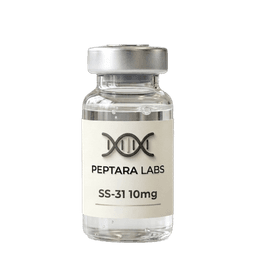
SS-31 Peptide for Sale
Published by Peptara Labs · Updated · How we research and check our pages
Peptara Labs sells SS-31 online as a 10mg research-grade vial for $120 USD, which is $12.00 per mg, and the released batch, lot SS31-20260602-09, tested at 98.42% purity by HPLC on a published third-party certificate. It is available to order now and ships tracked in 5 to 10 business days, guaranteed, and it is sold for research use only. SS-31 is the research name for elamipretide, the cardiolipin-binding mitochondrial peptide.
Flat $35 tracked shipping10mg per vial
$120 USD
Add 2 more, unlock 19%
| Test | Result | Verdict |
|---|---|---|
| Purity, HPLC | 98.42% | PASS |
| Identity, LC-MS | 640.38 m/z [M+H]+ | PASS |
| Sterility | No growth | PASS |
| Endotoxin | Within limit | PASS |
| Heavy metals + fentanyl | Not detected | PASS |
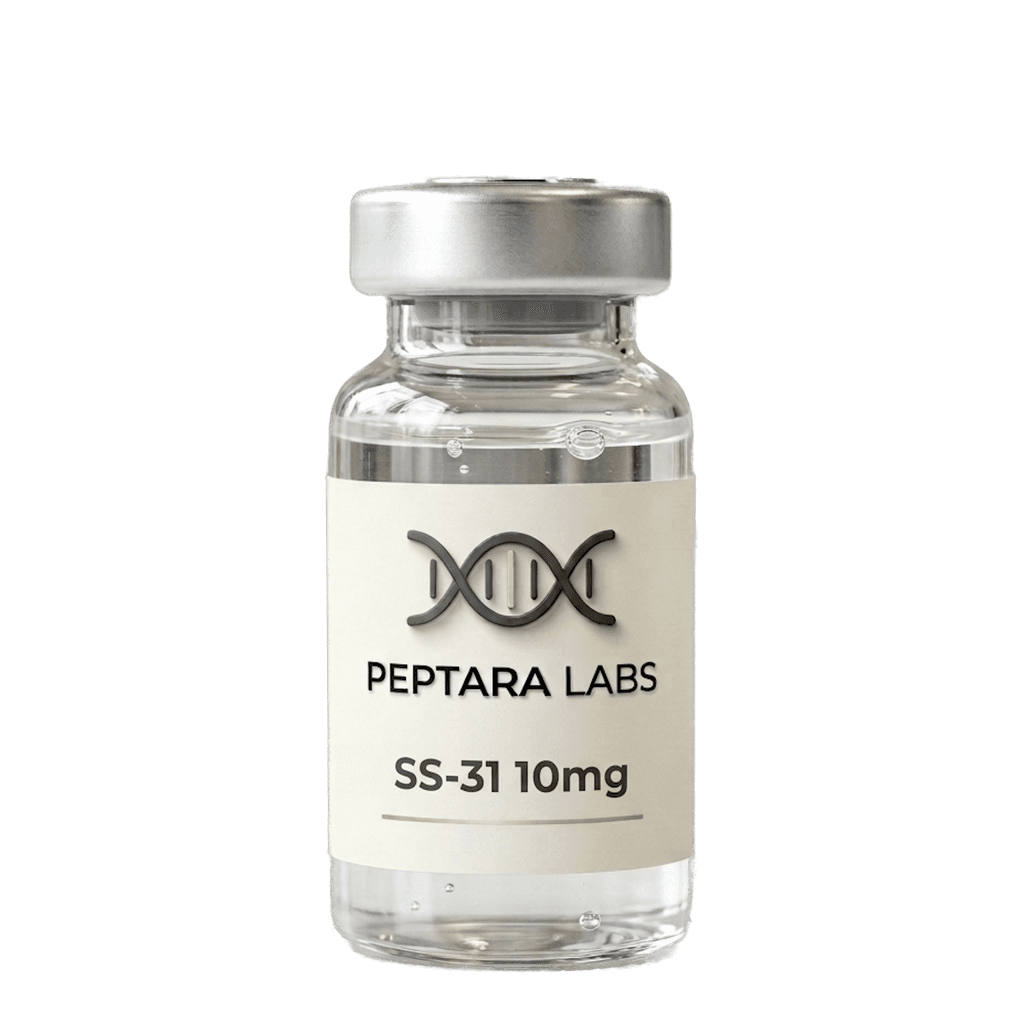
Shipping, delivery and guarantee terms
- Shipping
- Flat $35, tracked worldwide to supported markets
- Delivery
- 5 to 10 business days, guaranteed
- Payment
- Card, bank transfer, or crypto · All sales final except a purity failure
- Included
- 60-day money-back guarantee · Third-party batch COA
Buyer facts
What do you get when you buy SS-31 from Peptara Labs?
You get one sealed 10mg vial of lyophilized SS-31 powder, the cardiolipin-binding mitochondrial tetrapeptide also known as elamipretide, with bacteriostatic water in the order, from a batch whose third-party certificate is published in full: lot SS31-20260602-09, 98.42% purity by HPLC. The table reads each figure from the same catalog, pricing and certificate records the checkout uses.
| Detail | Peptara Labs SS-31 (10mg) | Where to check it |
|---|---|---|
| Vial | 10mg of lyophilized SS-31 powder in a sealed vial, with bacteriostatic water in the order | Certificate COA-2026-9503, net content 10.42 mg |
| Price | $120 USD a vial, or $102 with the 15 percent email-signup discount on a first order | The order panel above |
| Price per mg | $12.00 at the single-vial price | SS-31 price per vial |
| Multi-vial price | 40% off at 10 vials, $72 each | The order panel above |
| Availability | Available to order now | The order panel above |
| Purity | 98.42% by HPLC, lot SS31-20260602-09, tested September 2026 | Certificate COA-2026-9503 |
| Identity | Confirmed by LC-MS, measured mass 640.38 m/z [M+H]+ | Certificate COA-2026-9503 |
| Testing lab | Titreon Analytical, quality system aligned to ISO/IEC 17025:2017 (not itself accredited) | Certificates of analysis |
| Shipping and delivery | Flat $35 tracked shipping to the United States, Canada, the United Kingdom and New Zealand, free over $250. Delivery takes 5 to 10 business days, guaranteed. | Shown again at checkout, before payment |
| Guarantee | 60-day money back guarantee: a full refund if an independent lab test does not match the certificate. All sales otherwise final. | The guarantee section on this page |
| Status | Research use only. The approved elamipretide medicine is a prescription product; this research-grade vial is not covered by that approval. | SS-31 vs MOTS-c, compared |
The per-mg and multi-vial math is broken down on the SS-31 price per vial page. The SS-31 vs MOTS-c comparison sets its cardiolipin mechanism against the AMPK route, and MOTS-c and NAD+ sit in the same mitochondrial research area. The reconstitution calculator does the arithmetic for a lyophilized vial and reports it in units rather than mL.
Before you buy
What should you check before you buy SS-31?
Check that the certificate proves the batch is SS-31, not only that the sample is pure, and that the listing is clear it is not the approved medicine. The released batch, lot SS31-20260602-09, shows identity by LC-MS, 98.42% purity by HPLC against a not-less-than 95.0% release criterion, and 10.42 mg of net content in a 10mg vial.
- Two names, one molecule. SS-31 and elamipretide are the research and clinical names for the same tetrapeptide, so either name on a listing is fine. The certificate should identify it by LC-MS whichever name is used.
- Research grade, not the approved product. The approved elamipretide medicine is a prescription product dispensed through a clinician. A research-grade vial is not that product, and a seller who presents it as the approved medicine is misdescribing it.
- Identity, not only purity. A purity figure says a sample is mostly one compound; the LC-MS identity result is what says that compound is SS-31.
- The rest of the panel. Titreon Analytical's certificate also reports net content, sterility, bacterial endotoxin, heavy metals and a fentanyl screen.
- Your own batch. Vials ship unlabeled on purpose, so verification runs on your order number. Send it to us on WhatsApp and we will confirm the exact batch you received and its published certificate.
The checks that apply to any seller are in how to verify peptide purity, and the full certificate for this batch is on the SS-31 certificate card.
The short answer
What is SS-31 (elamipretide)?
SS-31, also called elamipretide, is a four-amino-acid peptide that concentrates in the inner mitochondrial membrane and binds cardiolipin, the phospholipid that holds the respiratory complexes in position there. The mechanism paper is precise about what that does and what it does not: in ischemic mitochondria the compound re-energized the organelle through the cardiolipin interaction, rather than by acting as a general free-radical scavenger (Birk et al., 2013). The human record sits in rare mitochondrial disease. MMPOWER-3 was a randomized clinical trial in primary mitochondrial myopathy (Karaa et al., 2023), and the TAZPOWER programme reported long-term open-label extension results in Barth syndrome, a genetic disorder of cardiolipin remodeling (Thompson et al., 2024). Peptara supplies research-grade SS-31 as a lyophilized 10mg vial for laboratory research; this page describes what published studies reported, not an effect in any person, and a qualified clinician is the only place a personal question belongs.
The Science
A Structural Target, Not an Antioxidant
Most compounds studied for mitochondrial stress are described as antioxidants. SS-31 is described differently in its own mechanism paper: it binds a specific phospholipid in the inner membrane, and the improvement in bioenergetics followed from that binding. The target is structural.
Binds Cardiolipin
Concentrates in the inner mitochondrial membrane and interacts with the phospholipid that organizes the respiratory complexes.
Restored Bioenergetics
Re-energized ischemic mitochondria through that interaction rather than through general radical scavenging.
Rare-Disease Trials
The human evidence comes from mitochondrial myopathy and Barth syndrome programmes, not from healthy adults.
Applications
Common Research Areas
Mitochondrial Membrane Biology
The cardiolipin interaction is the mechanism the literature is organized around.
Ischemia and Reperfusion
The founding paper measured ischemic mitochondria, which is where the bioenergetic finding comes from.
Primary Mitochondrial Myopathy
The MMPOWER-3 randomized trial population, reported in Neurology.
Barth Syndrome
A rare genetic cardiolipin disorder and the TAZPOWER programme population.
Naming
SS-31 and elamipretide: the same molecule
The two names are not two compounds. SS-31 is the research designation, from the Szeto-Schiller series it came out of, and elamipretide is the name the same tetrapeptide carries through its clinical programme. Papers use whichever belongs to their setting: the mechanism work is filed under SS-31 (Birk et al., 2013), the trials under elamipretide (Karaa et al., 2023; Thompson et al., 2024).
That matters when reading around the subject, because a search for one name returns half the literature. Both point at the same four-amino-acid sequence. What ships here is research-grade SS-31 in a lyophilized 10mg vial, which is a laboratory reagent and not the material used in either trial programme.
Evidence
What did the SS-31 trials actually study?
Two programmes carry most of the human record, and both are in rare disease. MMPOWER-3 was a randomized clinical trial of elamipretide in people with primary mitochondrial myopathy, published in Neurology (Karaa et al., 2023). TAZPOWER studied Barth syndrome, a genetic disorder of cardiolipin remodeling that lines up directly with the compound's mechanism, and reported 168-week open-label extension results (Thompson et al., 2024).
MMPOWER-3 read out negative, and that belongs in the body of the page rather than in a footnote. The trial did not meet its primary endpoints, six-minute walk distance and total fatigue score at 24 weeks, and its authors classify the result as Class I evidence that elamipretide does not improve those two measures against placebo in primary mitochondrial myopathy (Karaa et al., 2023). What the same trial did report is that subcutaneous elamipretide was well tolerated, with most adverse events mild to moderate in severity (Karaa et al., 2023).
The molecule does hold one narrow approval, under its clinical name. The FDA approved elamipretide hydrochloride as Forzinity on 19 September 2025 under application NDA 215244, and the approved label states an indication to improve muscle strength in adult and pediatric patients with Barth syndrome weighing at least 30 kg, granted under accelerated approval on an intermediate endpoint, with continued approval potentially contingent on a confirmatory trial (FDA, Drugs@FDA NDA 215244). That is a prescription medicine dispensed through a clinician. It is not this vial: what ships here is research-grade SS-31 for laboratory research, and no approval of any kind covers that.
Those populations are the boundary of the evidence, and it is worth stating plainly: no trial cited here enrolled healthy adults, and none measured aging, endurance or body composition. The mechanistic work in ischemic mitochondria is preclinical (Birk et al., 2013). Anything beyond that is extrapolation, and this page does not make it. Nothing here is medical advice.
The released SS-31 batch is lot SS31-20260602-09, certificate COA-2026-9503, tested at 98.42 percent purity by HPLC, and its certificate is published in full on the certificates page.
Research Timeline
From the membrane to the trials
Research Timeline
From the membrane to the trials
Research timeline
From the membrane to the trials
The target
SS-31 concentrates in the inner mitochondrial membrane and binds cardiolipin, the phospholipid that holds the respiratory complexes in working order (Birk et al., 2013).
The mechanism paper
In ischemic mitochondria the compound restored bioenergetics through that cardiolipin interaction rather than by acting as a general antioxidant, which is the finding the field is built on (Birk et al., 2013).
Mitochondrial myopathy
MMPOWER-3 was a randomized clinical trial of elamipretide in people with primary mitochondrial myopathy, reported in Neurology (Karaa et al., 2023).
Barth syndrome
The TAZPOWER programme reported 168-week open-label extension results in patients with Barth syndrome, a rare genetic cardiolipin disorder (Thompson et al., 2024).
Your Kit
What's Included
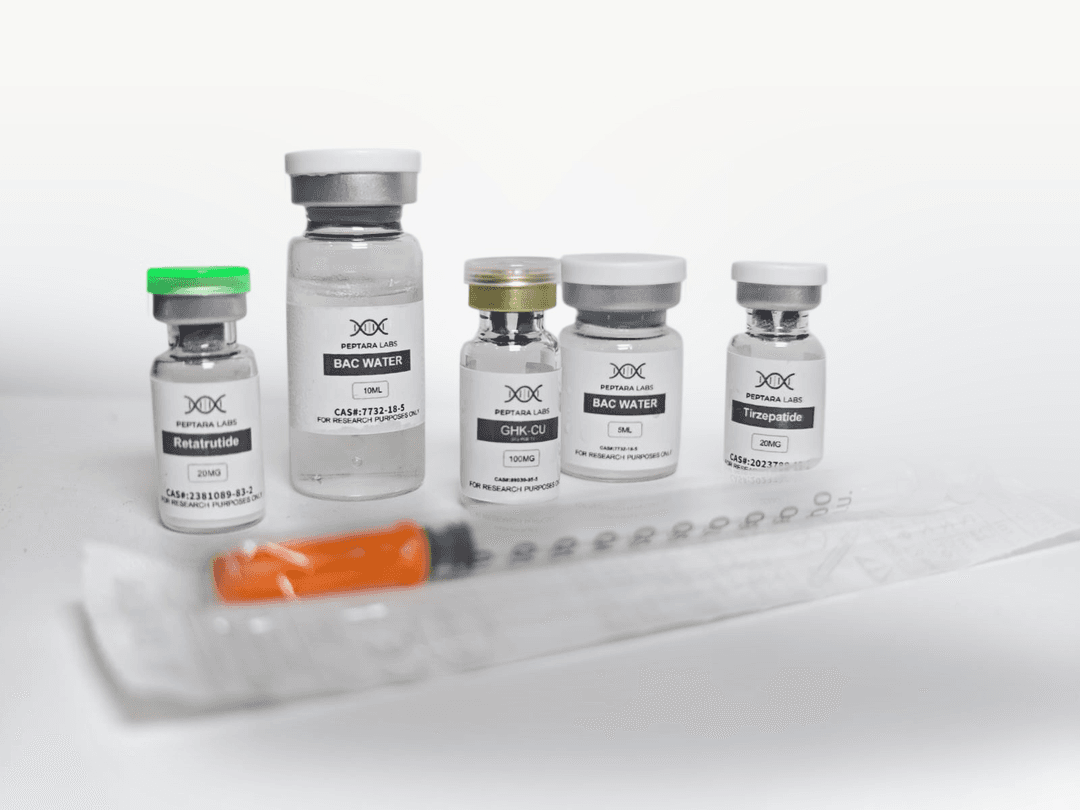
$120 USD
Flat $35 shipping · All sales final
SS-31 10mg Vial
10mg per vial · Lyophilized powder, sealed vial
Research Reference
The mechanism paper and both trial programmes, listed with their DOIs
Worldwide Shipping
5 to 10 business days, guaranteed
Ongoing order support
Direct team access
Your kit includes the vials and bacteriostatic water. Insulin syringes ship to select delivery regions; where they can't ship, we send a same-day sourcing link. A printed reference guide ships with every order.
Traveling with your order
Freeze-dried vials travel well; reconstituted vials travel cold. Rules vary by country. Share your dates when you order.
Why your vials arrive plain
Unlabeled on purpose: discreet, and standard for research-grade material. Match a batch to its certificate with your order number. See the COA page.
Our Guarantee
We Stand Behind Our Quality.
Peptara Labs supplies research-grade SS-31 (Elamipretide), third-party tested with a Certificate of Analysis on every batch. The guarantee is on the material and on how the order is handled. It is not a guarantee of any outcome.
60-Day Money Back Guarantee
Test it at any lab, or your money back
Send any vial to an independent lab within 60 days of delivery. If it does not test as stated on its certificate of analysis (COA), or your order was not handled correctly, you get a full refund. The 60 days is your window to verify us, not a shelf life. The guarantee is on product quality, never on a health outcome.
Study Protocol Reference, Included
Every order includes a written reference to the dose ranges published studies used, with the study named, plus support at no extra cost. This is not a prescription; consult a licensed physician.
Direct WhatsApp Access
Every order includes direct access to our support team. Questions about certificates, reconstitution, storage, shipping or an order, message us any time and a real person responds.
400+
Customers served
Consistently rated by our customers
Quality guarantee: full refund on any purity failure. All sales otherwise final. The 60-day money back guarantee covers product purity, certificate of analysis, and fulfillment. It is not conditioned on any outcome and does not promise one. This is educational information, not medical advice; consult a licensed physician.
Research and citations
Peer-reviewed sources
- Birk AV, et al. (2013). The mitochondrial-targeted compound SS-31 re-energizes ischemic mitochondria by interacting with cardiolipin. Journal of the American Society of Nephrology. doi.org/10.1681/ASN.2012121216
- Karaa A, et al. (2023). Efficacy and Safety of Elamipretide in Individuals With Primary Mitochondrial Myopathy: The MMPOWER-3 Randomized Clinical Trial. Neurology. doi.org/10.1212/WNL.0000000000207402
- Thompson WR, et al. (2024). Long-term efficacy and safety of elamipretide in patients with Barth syndrome: 168-week open-label extension results of TAZPOWER. Genetics in Medicine. doi.org/10.1016/j.gim.2024.101138
Citations refer to the peer-reviewed publications these figures are taken from. Every dose range reported on this site is the range a named study used. Not a substitute for medical advice.
Explore more
Related guides, comparisons, and compounds studied for related endpoints
MOTS-c
Mitochondrial-derived peptide studied through AMPK rather than the membrane.
SS-31 vs MOTS-c
Cardiolipin stabilization against AMPK activation, compared in one table.
NAD+
The redox coenzyme studied in the same energy-metabolism literature.
Humanin
Another mitochondrial peptide in the research literature.
Peptide Glossary
Peptide Side Effects
What Are Peptides
Are Peptides Safe
Certificates of Analysis
Published third-party batch certificates and what each panel measures.
Peptara FAQ
Sourcing, COAs, cold-chain, and payment questions answered.
About Peptara
Who we are and how we source and test.
Research stacks
Five named stacks grouped by research area, each at 35% off combined retail.
Buying SS-31: FAQ
Where can I buy SS-31 peptide?
Peptara Labs sells SS-31 online as a 10mg research-grade vial, ordered from this page. Outside its one narrow prescription approval, elamipretide reaches buyers only as research-grade SS-31 sold for laboratory research use, which makes the batch certificate the thing to compare between sources.
How much does SS-31 cost?
One 10mg vial is $120 USD, which is $12.00 per mg. Signing up by email takes 15 percent off a first order, which brings a vial to $102. Buying more of the same compound lowers the per-vial price on that line, to 40 percent off at 10 vials, which is $72 each.
Does Peptara Labs ship SS-31 to the US?
Yes. Orders to the United States, Canada, the United Kingdom and New Zealand ship tracked in 5 to 10 business days, guaranteed. Shipping is a flat $35, free over $250.
How do I verify the purity of SS-31 before I buy?
Read certificate COA-2026-9503 for the released batch, lot SS31-20260602-09: 98.42 percent purity by HPLC, identity by LC-MS and 10.42 mg of net content in a 10mg vial, tested by Titreon Analytical, whose panel also reports sterility, bacterial endotoxin, heavy metals and a fentanyl screen. Vials ship unlabeled, so after delivery your order number on WhatsApp is what ties your vial to its batch certificate.
What comes with a SS-31 order?
One sealed 10mg vial of lyophilized SS-31 powder and bacteriostatic water to reconstitute it, plus a printed reference guide to what published studies reported. The batch certificate is published on the certificates page, because the vial itself ships unlabeled.
SS-31 FAQ
What is SS-31 and how does it work?
SS-31 is a small tetrapeptide that concentrates in the inner mitochondrial membrane and binds cardiolipin, the phospholipid that organizes the respiratory complexes there. The mechanism paper showed that in ischemic mitochondria it restored bioenergetics through that cardiolipin interaction rather than by scavenging free radicals in the way a general antioxidant would (Birk et al., 2013). That distinction is the whole reason the compound is treated as its own class.
Is SS-31 the same thing as elamipretide?
Yes. SS-31 is the research designation and elamipretide is the clinical name for the same cardiolipin-binding tetrapeptide. Both names appear in the literature and refer to one molecule, which is why a search for either returns the same trial programmes (Karaa et al., 2023; Thompson et al., 2024).
What have the human trials studied?
Two programmes account for most of the human record. MMPOWER-3 was a randomized clinical trial of elamipretide in people with primary mitochondrial myopathy, reported in Neurology (Karaa et al., 2023). TAZPOWER studied Barth syndrome, a rare genetic disorder of cardiolipin remodeling, and reported 168-week open-label extension results (Thompson et al., 2024). Both are rare-disease populations, which is what the evidence base currently covers.
Is SS-31 proven for anti-aging or athletic performance?
No. The published human trials are in rare mitochondrial disease populations, not in healthy adults, and no trial in this literature measured aging or athletic performance as an endpoint. Claims in that direction are not supported by the papers cited on this page.
How is SS-31 different from MOTS-c?
Both are studied in mitochondrial biology and they act at different levels. SS-31 binds cardiolipin in the inner membrane, a structural target (Birk et al., 2013). MOTS-c is a mitochondrial-derived peptide studied as a signal through AMPK. The two are compared side by side on the SS-31 vs MOTS-c page.
Is SS-31 an approved medicine?
The molecule holds one narrow approval under its clinical name. The FDA approved elamipretide hydrochloride as Forzinity on 19 September 2025, indicated to improve muscle strength in adult and pediatric patients with Barth syndrome weighing at least 30 kg, under accelerated approval on an intermediate endpoint (FDA, Drugs@FDA NDA 215244). That is a prescription medicine dispensed through a clinician. Peptara Labs supplies research-grade SS-31 for laboratory research, which is not an approved pharmaceutical product and is not covered by that approval. Nothing on this page is a medical claim or a recommendation, and anything relating to a diagnosed condition is a conversation for a licensed clinician.
Is Peptara Labs a real company?
Yes. Peptara Labs is a registered business with responsive customer support via WhatsApp. Unlike anonymous Telegram sellers, we stand behind every order with our name, reputation, and ongoing support.
Are your peptides real?
Every SS-31 vial comes with a third-party Certificate of Analysis (COA) confirming identity and purity. We source from verified manufacturers and can provide lab documentation upon request. If you want to see a COA before ordering, message us on WhatsApp and we'll send it over.
Will the peptide survive shipping and heat?
Yes. Peptides ship in their lyophilized (freeze-dried powder) form, which is stable at room temperature for weeks, and fast tracked delivery keeps transit short. Handling and storage instructions are included with every order.
I can find cheaper peptides on Telegram.
You can. But you don't know what's in them, who made them, or how they were stored. Telegram sellers operate anonymously with no accountability. No COA. No real company behind them. No support if something goes wrong. Our price includes third-party testing, fast delivery, bacteriostatic water, COA access, and educational support. We don't just sell peptides. We make sure you get a verified, properly handled product you can trust.
Is my payment secure and discreet?
Yes. We accept Visa, Mastercard and Amex cards, bank transfer, and USDT, USDC or BTC crypto, and we handle every order discreetly. All transactions are secure and your financial information is never stored. If you have concerns about a specific payment method or about discretion, message us and we'll find an option that works for you.
Interested in SS-31?
Order SS-31 today. Worldwide shipping, 5 to 10 business days, guaranteed.
Order NowCertificate of analysis included · Order support on WhatsApp · Tracked worldwide shipping